Linderman Library Rotunda stained glass dome
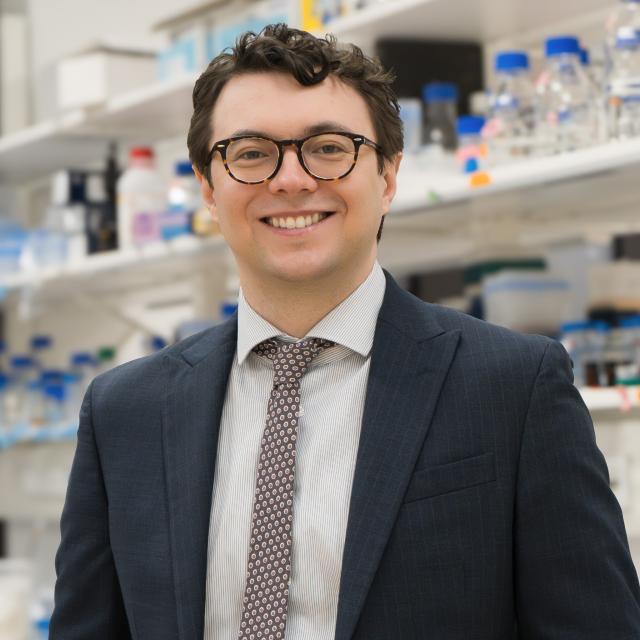
Assistant professor Darrin Schultz standing in a lab for his portrait

Darrin Schultz

Assistant Professor

dts@lehigh.edu
Education:

Postdoc in Neurobiology, Stanford University, 2025-2026

Postdoc in Neuroscience and Developmental Biology, University of Vienna, 2022-2025

Ph.D. in Biomolecular Engineering and Bioinformatics, University of California, Santa Cruz & Monterey Bay Aquarium Research Institute, 2021

Fulbright Fellow, Nagoya University, Japan, 2013–2014

B.A. in Biology (minors: Chemistry, East Asian Studies), Oberlin College, 2013

Explore this Profile
×

Additional Interests

  • Chromosome evolution and comparative genomics
  • Animal origins and phylogenetics
  • Bioluminescence evolution and biochemistry
  • Genome assembly and bioinformatics tool development
  • Single-cell and multi-omic approaches to genome evolution
  • Genomic changes and human disease

Research Statement

Animals originated in the ocean over half a billion years ago. How have animals diversified from an ancestor with only one or a few cells to the incredibly rich spectrum of body plans, cell types, and ecological strategies that fill Earth’s habitats today? My lab compares chromosome-scale genomes across the diversity of animals and their closest relatives, from ctenophores and sponges to protists, to read the evolutionary record preserved in chromosome structure and sequence. We are also extending these approaches to understand how chromosomal rearrangements or mutations contribute to human disease.

Our work has shown that chromosomal rearrangements carry an irreversible record of deep evolutionary history, addressing long-standing debates such as the relatedness of ctenophores, sponges, and all other animals (Schultz et al., Nature 2023). We study marine animals in nature firsthand and in the lab to generate questions about their biology, and use comparative genomics and molecular biology to answer those questions. We are now scaling these approaches across the tree of animal life and developing single-cell and multi-omic methods to connect how chromosomes change over evolutionary time to how cells diversify and specialize. Some examples include understanding the evolutionary origins, function, and biochemistry of bioluminescence across the tree of life, tracing individual genes to their ancestral chromosomes, and finding how body plan was affected by chromosomal changes.

Given the challenges of working with non-model organisms, we develop new computational and molecular tools and share them as open-source software and protocols for large-scale comparative genomics.

Biography

Darrin T. Schultz is a scientist and naturalist exploring the origin of animals and unique life on Earth. Born in the US Midwest, he completed his undergraduate degree at Oberlin College, where he studied biology with minors in chemistry and East Asian studies. He then spent a year in Japan as a Fulbright Fellow at Nagoya University, studying the evolution of bioluminescence across the tree of life.

He earned his Ph.D. from the University of California, Santa Cruz in collaboration with the Monterey Bay Aquarium Research Institute (MBARI), where he assembled the first chromosome-scale genomes of ctenophores (comb jellies), marine sponges, and close protist relatives to animals, and developed computational tools for comparative genomics. His doctoral work included deep-sea fieldwork using remotely operated vehicles, plankton trawling, and blue-water SCUBA diving in the Pacific.

Darrin then moved to the University of Vienna as a postdoc in the lab of Oleg Simakov, where he led research on the evolution of animal chromosomes and contributed to genome projects spanning cephalopods, cnidarians, annelids, sponges, and more. His 2023 paper in Nature addressed the earliest branching events in animal evolution — work covered by the New York Times, The Guardian, Scientific American, and other major outlets. His remaining body of work in Vienna brought methods development in comparative genomics to the tree-of-life scale, resulting in an “atlas” of animal chromosome evolution.

To understand the fundamentals of chromosome evolution and regulation at single-cell resolution, he joined Stanford University as a postdoc in the lab of Longzhi Tan, studying 3D genome organization in  aging and neurodegeneration.

In July 2026, Darrin joins Lehigh University as an Assistant Professor in the Department of Biological Sciences and Lehigh Oceans, where he is building the Schultz Evolutionary Genomics Lab. Outside of the lab, Darrin is a scuba diver, photographer, language learner, and an avid chef.

† = corresponding author; * = equal contribution

2026

(Review) Schultz DT†, Simakov O†. (2026). “Topological Approaches in Animal Comparative Genomics.” Annual Review of Animal Biosciences, 14, 17–48.

2025

Han B*, Connolly SM*, Schultz DT, Wilson LFL, Gulsevin A, Meiler J, Karakas E, Ohi MD†, Kenworthy AK†. (2025). “Evolutionarily diverse caveolins share a common structural framework built around amphipathic disks.” Journal of Cell Biology, 224(9), e202411175.

2024

Liu H, Steenwyk JL, Zhou X, Schultz DT, Kocot KM, Shen X, Rokas A†, Li Y†. (2024). “A taxon-rich and genome-scale phylogeny of Opisthokonta.” PLOS Biology.

Ahuja N†*, Cao X*, Schultz DT*, Picciani N, Lord A, Shao S, Jia K, Burdick DR, Haddock SHD, Li Y, Dunn CW. (2024). “Giants among Cnidaria: large nuclear genomes and rearranged mitochondrial genomes in siphonophores.” Genome Biology and Evolution, 16, 3.

(Book Chapter) Schultz DT. (2024). “The story of bioluminescent jellyfish” (in Japanese, trans. Y. Oba). In The Story of Bioluminescent Organisms — Y. Oba. Asakura Publishing.

2023

Schultz DT†, Haddock SHD, Bredeson JV, Green RE, Simakov O†, Rokhsar DS†. (2023). “Ancient gene linkages support ctenophores as sister to other animals.” Nature, 618, 110–117.

Zimmermann B*, Montenegro JD*, Robb SMC, et al., Schultz DT, et al. (2023). “Topological structures and syntenic conservation in sea anemone genomes.” Nature Communications, 14, 8270.

Destanović D*, Schultz DT*, et al. (2023). “A chromosome-level reference genome for the common octopus, Octopus vulgaris.” G3: Genes | Genomes | Genetics, 13, 12, jkad220.

Roberts MB, Schultz DT†, Gatins R, Escalona M, Bernardi G†. (2023). “Chromosome-level genome of the three-spot damselfish, Dascyllus trimaculatus.” G3, 13, 4, jkac339.

Limón J, Roberts M, Schultz DT, Bernardi G†. (2023). “The complete mitochondrial genome of Dascyllus trimaculatus.” Mitochondrial DNA Part B, 8:1, 105–106.

(Review) Baden T, et al., Schultz DT, et al. (2023). “Cephalopod-omics: Emerging Fields and Technologies in Cephalopod Biology.” Integrative and Comparative Biology, 63(6), 1226–1239.

2022

Simakov O†, Bredeson J, Berkoff K, Marletaz F, Mitros T, Schultz DT, et al. (2022). “Deeply conserved synteny and the evolution of metazoan chromosomes.” Science Advances, 8, 5.

Johnson SB†, Winnikoff JR, Schultz DT, Christianson LM, Patry WL, Mills CE, Haddock SHD†. (2022). “Speciation of pelagic zooplankton: Invisible boundaries can drive isolation of oceanic ctenophores.” Frontiers in Genetics, 13:970314.

(Review) Oba Y†, Schultz DT. (2022). “Firefly genomes illuminate the evolution of beetle bioluminescent systems.” Current Opinion in Insect Science, 100879.

Christianson LM†, Johnson S†, Schultz DT, Haddock SHD†. (2022). “Hidden diversity of Ctenophora revealed by new mitochondrial COI primers and sequences.” Molecular Ecology Resources, 22(1), 283–294.

2021

Schultz DT†*, Francis WR*, McBroome JD, Christianson LM, Haddock SHD, Green RE. (2021). “A chromosome-scale genome assembly and karyotype of the ctenophore Hormiphora californensis.” G3, 11, 11.

2020

Martini S†*, Schultz DT*, Lundsten L, Haddock SHD. (2020). “Bioluminescence in an Undescribed Species of Carnivorous Sponge (Cladorhizidae) From the Deep Sea.” Frontiers in Marine Science, 7, 1041.

Lambert GG, et al., Schultz DT, et al. (2020). “Aequorea’s secrets revealed: New fluorescent proteins with unique properties for bioimaging and biosensing.” PLOS Biology, 18(11), e3000936.

Breusing C†, Schultz DT, Sudek S, Worden AZ, Young CR. (2020). “High-contiguity genome assembly of the chemosynthetic gammaproteobacterial endosymbiont of the cold seep tubeworm Lamellibrachia barhami.” Molecular Ecology Resources, 20, 5.

Goodheart JA, et al., Schultz DT, et al. (2020). “Laboratory culture of the California Sea Firefly Vargula tsujii: Developing a model system for marine bioluminescence.” Scientific Reports, 10, 10443.

Schultz DT†, Eizenga JM, Corbett-Detig RB, Francis WR, Christianson LM, Haddock SHD. (2020). “Conserved novel ORFs in the mitochondrial genome of the ctenophore Beroe forskalii.” PeerJ, 8, e8356.


Teaching

Marine Biology - Fall 2026